Top 5 of 8 shown — full shortlist above.
The short answer
Most cats do best with an unscented, fine-particle clumping litter, and clay (bentonite) clumps the hardest and controls odor best according to real-world dust and clump testing (Honeycare’s 2025 comparison found bentonite produced roughly 40-50% less dust than regular clay and formed noticeably stronger clumps than plant-based alternatives). If you want a plant-based or flushable option instead, you’ll trade some clumping strength and scooping ease for a lighter bag and easier disposal. There’s no single “best” litter — there’s a best litter for your cat’s preferences, your box setup, and what you’re willing to deal with on laundry day when it tracks across the floor.
I spend my week reading litter spec sheets, ingredient lists, and the fine print in thousands of owner reviews rather than scooping boxes myself. The pattern that emerges is consistent: the litters that perform best in independent testing and vet guidance are almost never the ones with the loudest marketing claims (“30-day odor control!”, flushable branding, pastel packaging). Below is the full map of the category, how to actually choose, and the mistakes that show up over and over in owner complaints.
The main litter types, and who each is for
Clumping clay (bentonite). The category default, and for good reason — sodium bentonite swells 15 to 18 times its dry volume when wet (per CMSINDUSTRIES and CatWatch Newsletter research), which is exactly why it forms such hard, scoopable clumps. Best for most multi-cat households and anyone using a sifting or automatic box, since the clumps hold together under mechanical raking. Kittens under 12 weeks and cats with pica (a tendency to eat litter) should avoid it, since ingestion of swelling clay carries a real GI obstruction risk according to veterinary consensus, even though scientific literature on frequency is still thin.
Non-clumping clay. Cheaper and simpler, but it can’t be scooped selectively — you’re stirring urine into the box until a full change. Mostly used for kittens too young for clumping litter, or budget-constrained multi-box households willing to do full changes more often.
Silica gel/crystal litter. Absorbs liquid instead of clumping, and in Honeycare’s testing led the field in pure odor capture. It’s the amorphous form of silica, which PrettyLitter and Catit both note is considered safe, unlike the crystalline silica dust found in clay litters that NIOSH and OSHA flag as a long-term respiratory concern. Best for owners who want a lightweight box and long stretches between full changes. Downside: some cats reject the crunchy texture underfoot, and because urine isn’t clumped, you can’t remove it selectively — you’re monitoring saturation and scooping solids daily instead.
Plant-based/wood litter (corn, wheat, pine, wood fiber, walnut). Biodegradable, often flushable or compostable, and generally lower-dust. The trade-off, per reviews from Grist and Cats.com, is weaker clumping — these formulas typically need more frequent scooping than clay to keep odor in check, and some can develop mold if a box isn’t kept dry. Corn and wheat formulas have also been linked to allergic reactions in sensitive cats (BetterPet). Best for eco-conscious owners and cats without grain sensitivities; not the top pick if hard, low-maintenance clumps are your priority.
Paper litter. Very low dust and soft on paws, which makes it a common post-surgery recommendation from vets. As a daily-use litter it falls short on odor control and gets mushy fast (Cats.com), so it’s more of a specialty pick than an everyday one.
How to choose: every dimension that actually matters
Clumping strength. If you use a sifting or automatic litter box, you need clumps that survive mechanical agitation without crumbling — hard bentonite clay or a purpose-built “rock-hard clump” formula is the safer bet over softer plant-based litters.
Dust level. This isn’t just about your floors. Dust settles on paws and gets ingested during grooming, and cats with asthma or other respiratory conditions can visibly worsen with exposure to dusty clay (Honeycare, Newsweek). Low-dust formulas matter even more if anyone in the house has allergies or asthma.
Scent. Skip it if you can. Veterinarians consistently recommend unscented litter because a cat’s sense of smell is far more sensitive than ours, and added fragrance is a common reason cats start avoiding the box (Newsweek, Jason Cat Litter). Scented litter also does nothing to extend how often you need to scoop — that’s a persistent myth. Daily scooping is required regardless of scent strength, according to veterinary guidance.
Tracking. Fine clay particles cling to paws and spread further than coarser corn or wood granules, though granule size is also a comfort factor for the cat. There’s a real trade-off here: coarser, less-tracking litter can feel less pleasant underfoot to a paw-sensitive cat, so this is genuinely trial and error per household.
Multi-cat vs. single-cat formulas. “Multi-cat” litters generally pack in more odor-control additives (extra baking soda, activated charcoal, or added odor eliminators) to handle heavier ammonia load. A single, well-used cat can often do fine on a standard formula; two or more cats sharing boxes usually benefits from the upgraded odor formulas.
Automatic and sifting box compatibility. Not all litter is rated for mechanical boxes. Check that clumps are described as “hard” or “rock-hard” and that the brand explicitly lists automatic-box compatibility, or you risk clogs and jams.
Disposal method. Decide before you buy, not after. See the flushable section below — it’s more complicated than the packaging suggests.
Kitten safety. Kittens under 12 weeks should use non-clumping litter, per veterinary guidance, since they’re more prone to exploratory eating and less able to safely pass swelling clay if ingested.
Your cat’s actual preference. Cats strongly prefer small, fine-particle litter and frequently reject pellet-style litters, according to veterinary behaviorist Dr. Jessica K. Hockaday (via CNN Underscored). All the specs in the world don’t matter if your cat refuses to step in the box.
Best cat litter for odor control
For odor control specifically, bentonite clay formulas with added activated charcoal or baking soda currently outperform most alternatives, and silica crystal litter leads in raw odor-capture testing (Honeycare). Among the litters in this guide, Fresh Step Extreme Clumping Litter with Febreze Freshness pairs activated charcoal with what the brand calls Ammonia Block technology and carries a 15-day odor guarantee, while ARM & HAMMER’s Clump & Seal Slide Platinum adds 10% more odor eliminators specifically for multi-cat ammonia buildup, backed by a 14-day guarantee. If you want odor control without fragrance, Purina Tidy Cats Free & Clean uses activated charcoal instead of perfume and still promises up to 10 days of odor control — a better fit for scent-sensitive households, since masking scents can bother cats more than the odor itself. One low-tech trick that shows up consistently in vet-adjacent advice: sprinkling plain baking soda at the bottom of the box under the litter is a genuinely effective, cheap odor booster (Vistagato, Dr. Patrick Mahaney), and keeping litter at a 2-3 inch depth (Furrbby) also meaningfully improves absorption and odor control regardless of brand.
Tidy Cats clumping litter: what to know
Purina’s Tidy Cats line is one of the most widely available clumping clay litters in the US, and the Free & Clean Unscented variant featured here is built around activated charcoal rather than fragrance for odor control, with firm clumps and low dust. It’s a solid, budget-tier choice for sensitive-nosed households, though it’s worth knowing that some long-time users report the clumping consistency and dust level shifted after a recent formula change — worth watching your first few bags closely if you’re a longtime Tidy Cats household switching varieties.
Sifting litter boxes: what litter works, what doesn’t
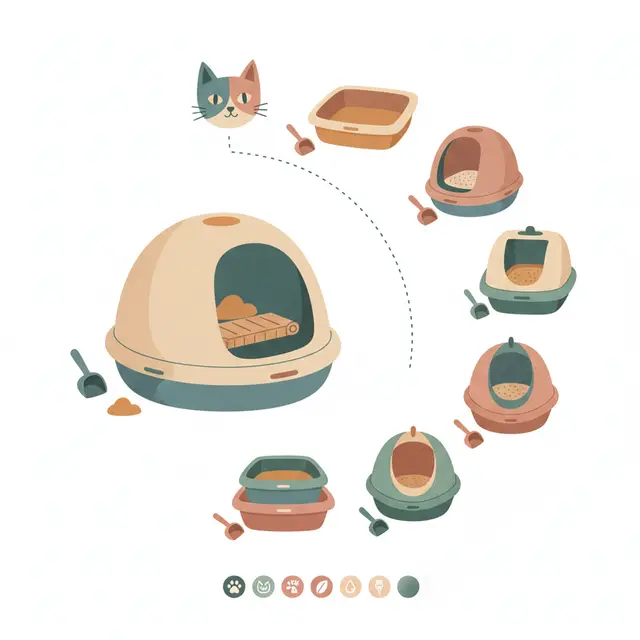
Sifting litter boxes (and automatic/mechanical boxes) need litter that clumps hard enough to survive raking or rotation without crumbling into loose debris that falls through the sifting layer. Soft-clumping plant-based litters and non-clumping formulas generally aren’t a good match. Look for litter explicitly marketed as compatible with automatic boxes — Dr. Elsey’s Ultra Unscented, Fresh Step Extreme, and both ARM & HAMMER Clump & Seal Slide formulas in this guide are built or labeled for that kind of mechanical use, with hard, moisture-activated clumps designed to hold their shape.
The cat litter oil stain problem
Oily, greasy residue on plastic litter boxes usually comes from a cat’s natural coat oils and skin secretions mixing with litter dust and clumping onto the box surface over time, not from anything wrong with the litter itself, though clay dust tends to bind to it more visibly than plant-based litter does. It builds up fastest in boxes that aren’t fully washed regularly — scooping daily isn’t the same as cleaning. Dr. Patrick Mahaney’s guidance is to do a full box wash (soap and water, no harsh chemicals that leave scent residue) roughly every two weeks, which prevents oily film from setting into the plastic. Litters with a non-stick design, like ARM & HAMMER’s Clump & Seal Slide line, are specifically engineered to reduce this kind of residue buildup by letting litter and grime slide out rather than adhere to the box surface.
Common mistakes buyers make
Assuming “flushable” means safe to flush. Most litters marketed as flushable still cause septic system clogs, since wastewater treatment plants aren’t designed to process pet litter (Septic Safe Solutions, EPA data via ShunWaste). There’s also a genuine public-health angle: cat waste can carry Toxoplasma gondii, a parasite that survives sewage treatment and has been linked to infections in marine mammals like sea otters (Grist, ShunWaste). A single gram of infected feces can contaminate thousands of liters of water. Some places have gone further — California requires warning labels on flushable litter, and Rhode Island bans flushing outright (Great Pet Care). The safer default, regardless of what the bag says, is trash disposal in a sealed bag; only compost litter that’s certified compostable, and only at composting facilities that reach 145°F or higher (Petmate). Never compost clay or silica litter.
Confusing crystalline and amorphous silica. These are not the same material despite the name overlap. Clay litters contain crystalline silica dust, which OSHA and NIOSH have flagged for respiratory risk with long-term inhalation exposure. Silica gel crystal litters use amorphous silica, a non-crystalline form that PrettyLitter and Catit both describe as safe for this use. Don’t assume “silica” on a label means the same risk profile as clay dust.
Thinking scent equals cleanliness. It doesn’t, and it can backfire. Scented litter doesn’t extend scooping intervals and can actually drive litter-box avoidance in scent-sensitive cats (Newsweek, Jason Cat Litter). Daily scooping is non-negotiable no matter what the label promises.
Not having enough boxes. The standard rule from feline behavior specialists is one box per cat plus one extra (n+1) — a single household cat still technically needs two boxes available. Boxes should also be about 1.5 times the cat’s nose-to-tail length, and kept well away from food and water bowls (The Cat Site).
Switching litter cold turkey. Cats are creatures of habit around elimination, and an abrupt full switch is a common trigger for litter box avoidance. Mix the new litter in gradually over one to two weeks (Jason Cat Litter).
Ignoring dust for respiratory-sensitive households. If anyone (human or feline) in the home has asthma or allergies, dust level should outrank almost every other spec on the list, per PetMD’s vet consensus.
The environmental angle, honestly
Sodium bentonite is obtained through strip mining, which damages habitats (Cats.com, Petmate), and clay litter itself is non-biodegradable, taking centuries to break down in a landfill. At scale, the numbers are notable: litter from the roughly 77 million pet cats in the US generates an estimated 2.5 million metric tons of CO2-equivalent methane annually once you account for landfill decomposition (MyCatJournal, citing 2021 research and EPA data), and methane traps roughly 25 times more heat than CO2 over a 100-year span. If that weighs on your choice, plant-based and wood-fiber litters are the more sustainable pick, with the honest caveat that they generally need more frequent scooping to match clay’s odor control.
Our picks by category
Best for multi-cat, flushable/plant-based: World’s Best Cat Litter Multi-Cat Unscented Clumping Corn Cat Litter. Whole-kernel corn forms tight clumps and is both flushable and compostable, though several owners note it tracks more than clay and the granules run larger than fine clay litter.
Best fragrance-free odor control: Purina Tidy Cats Free & Clean Unscented Clumping Cat Litter. Activated charcoal instead of perfume, firm clumps, and it’s genuinely everywhere — a low-risk starting point for a sensitive-nosed household, with the caveat that some long-time users report a formula shift affecting consistency.
Best for maximum scent-masking in multi-cat homes: Fresh Step Extreme Clumping Litter with Febreze Freshness, Mountain Spring. Ammonia Block tech plus charcoal and a 15-day odor guarantee, but the fragrance is strong enough to be a dealbreaker for scent-sensitive cats or owners.
Best for scrub-free cleanup: ARM & HAMMER Clump & Seal Slide Multi-Cat Clumping Cat Litter. Non-stick technology genuinely reduces the scraping most owners resign themselves to, with rock-hard clumps and very low dust; a portion of recent reviewers do note more dust in newer batches.
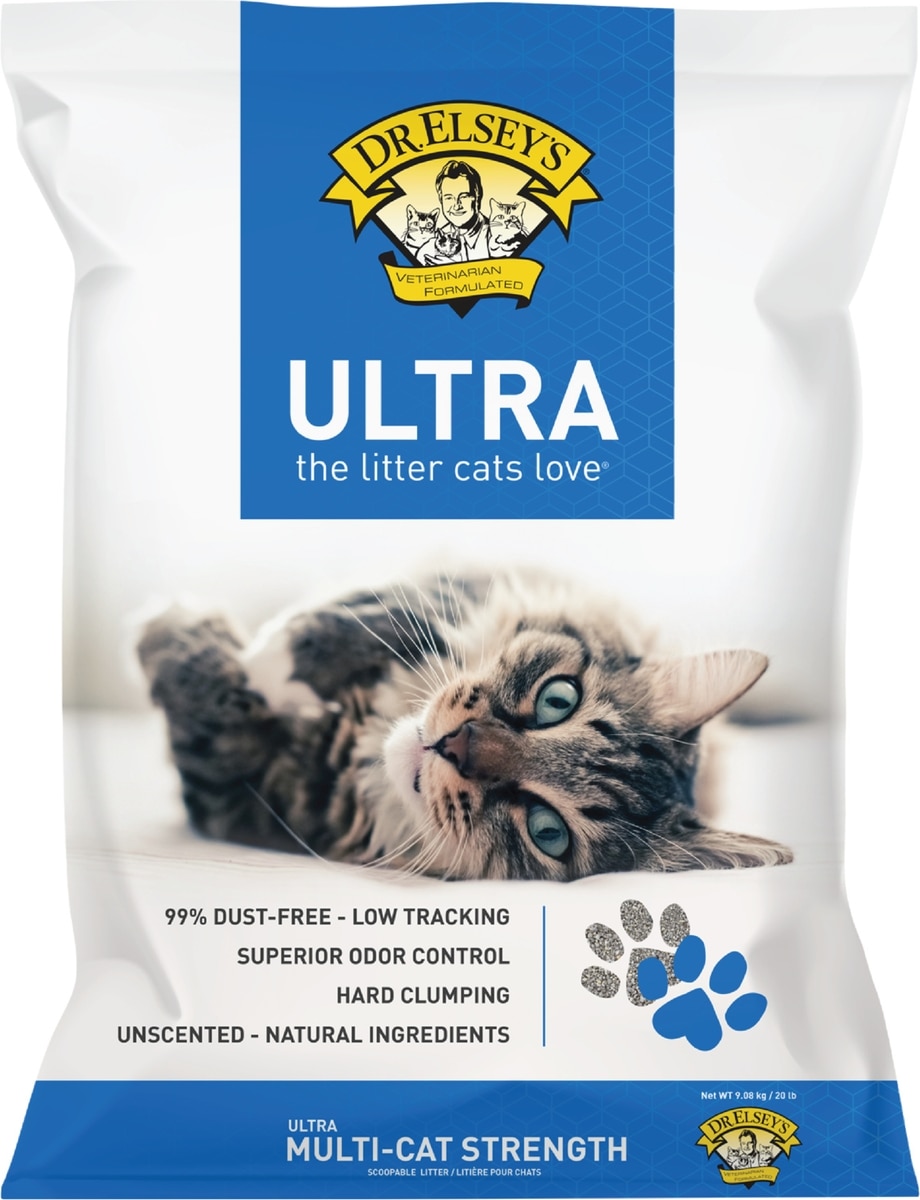
Best for sifting/automatic boxes and multi-cat homes: Dr. Elsey’s Ultra Unscented Clumping Clay Cat Litter. Vet-formulated, 100% bentonite, hard clumps that hold up under mechanical raking, and low-dust enough to suit allergy-prone households — the trade-off is that those same rock-hard clumps can be genuinely tough to scrape off a plastic box.
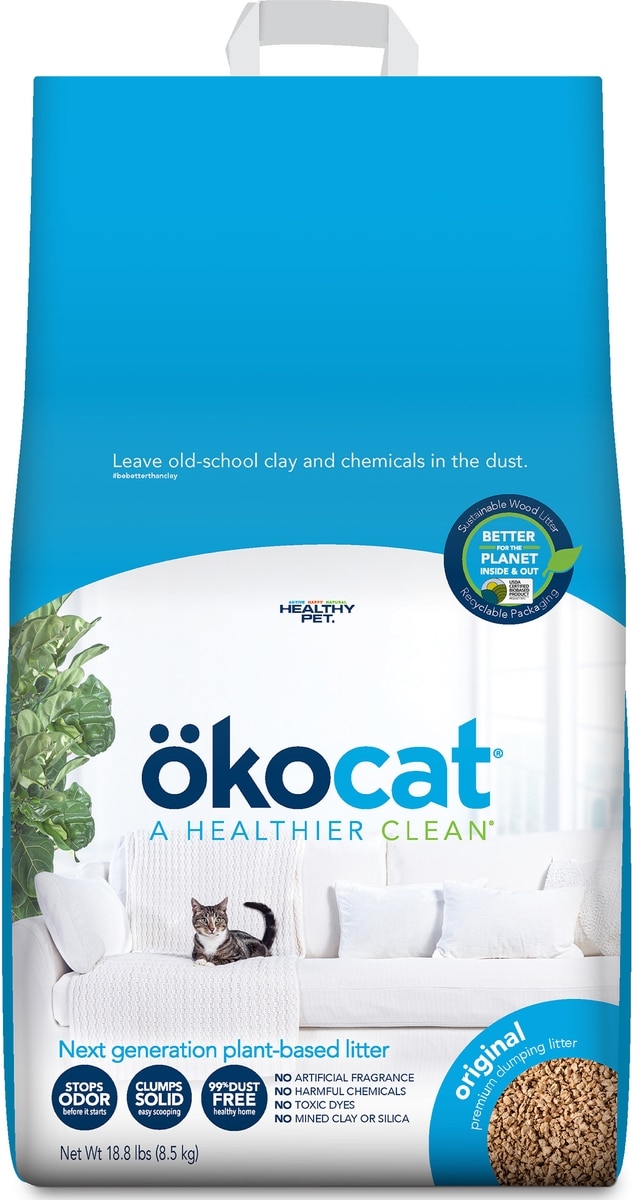
Best eco-friendly pick: ökocat Original Premium Wood Clumping Cat Litter. Reclaimed wood fiber, no mined clay, flushable and biodegradable, and very low dust. Clumps are softer than clay and it isn’t the brand’s low-tracking option, so expect a bit more cleanup around the box.
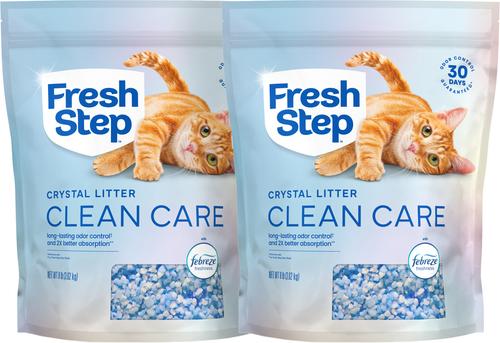
Best for lightweight, low-maintenance carrying: Fresh Step Crystals Scented Non-Clumping Cat Litter. Long stretches between full changes and a much lighter bag, but non-clumping means you can’t selectively remove urine, and some long-term users report rising dust in recent batches.
Best upgraded odor formula for heavy multi-cat use: ARM & HAMMER Clump & Seal Slide Platinum Multi-Cat Clumping Cat Litter. Same non-stick base as the standard Slide formula plus 10% more odor eliminators for tougher smells; some reviewers feel the price premium over the standard version isn’t fully justified by the performance gap.
Bottom line
For most multi-cat homes, especially with a sifting or automatic box, a hard-clumping bentonite clay litter like Dr. Elsey’s Ultra Unscented or one of the ARM & HAMMER Slide formulas will give you the most reliable odor control and easiest cleanup, backed by real-world dust and clump testing. If flushability, composting, or avoiding clay mining matters more to you than clump strength, World’s Best Cat Litter or ökocat are the better-reasoned choices, with the honest expectation of more frequent scooping. Whatever you land on, introduce it gradually, skip the fragrance if your cat seems sensitive, and don’t trust a “flushable” label over your own septic system’s limits.
Keep reading
Sources