Buying guide
Best cat self-cleaning litter box in 2026: our top picks
By Priya Novak · Senior writer · Reviewed by Grant Reyes
Last updated
We earn commissions from links on this page, at no cost to you. Our picks stay independent. Prices are indicative and were last checked around publication — they change often, so confirm the current price on the retailer’s site. How we research & rank →
Our picks
Ranked, with the trade-offs
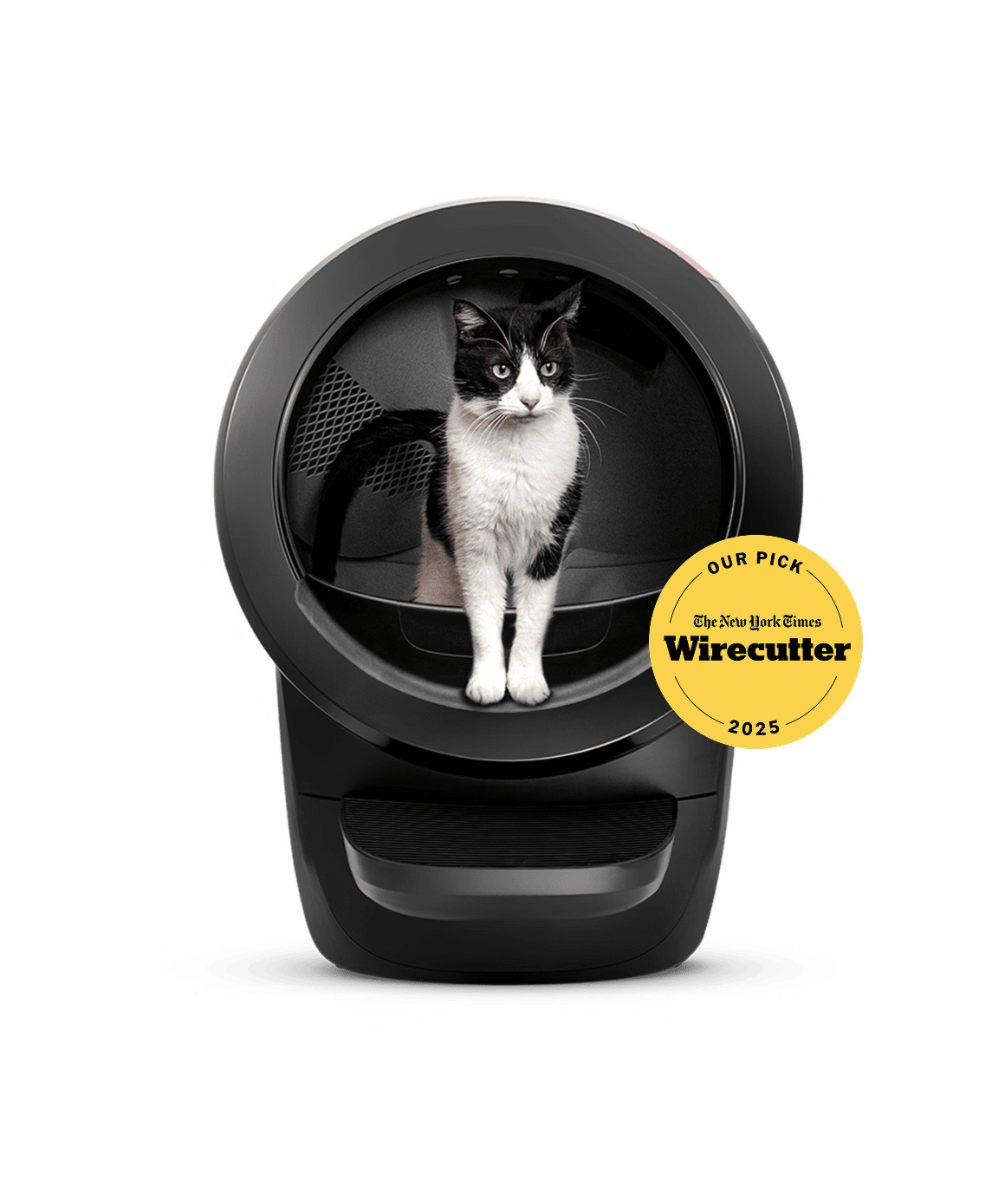
Whisker Litter-Robot 4
from
$699
A globe-shaped automatic litter box that sifts waste after every use and tracks cat weight and habits via app.
Pros
- + Reliably sifts and separates waste with minimal clumps stuck to walls
- + App gives real-time insight into litter/waste levels, weight, and activity
- + Wide opening comfortably fits kittens and large breeds
Cons
- – Drawer sensor can misread as full and require recalibration
- – Cleaning the unit's components still requires some manual effort
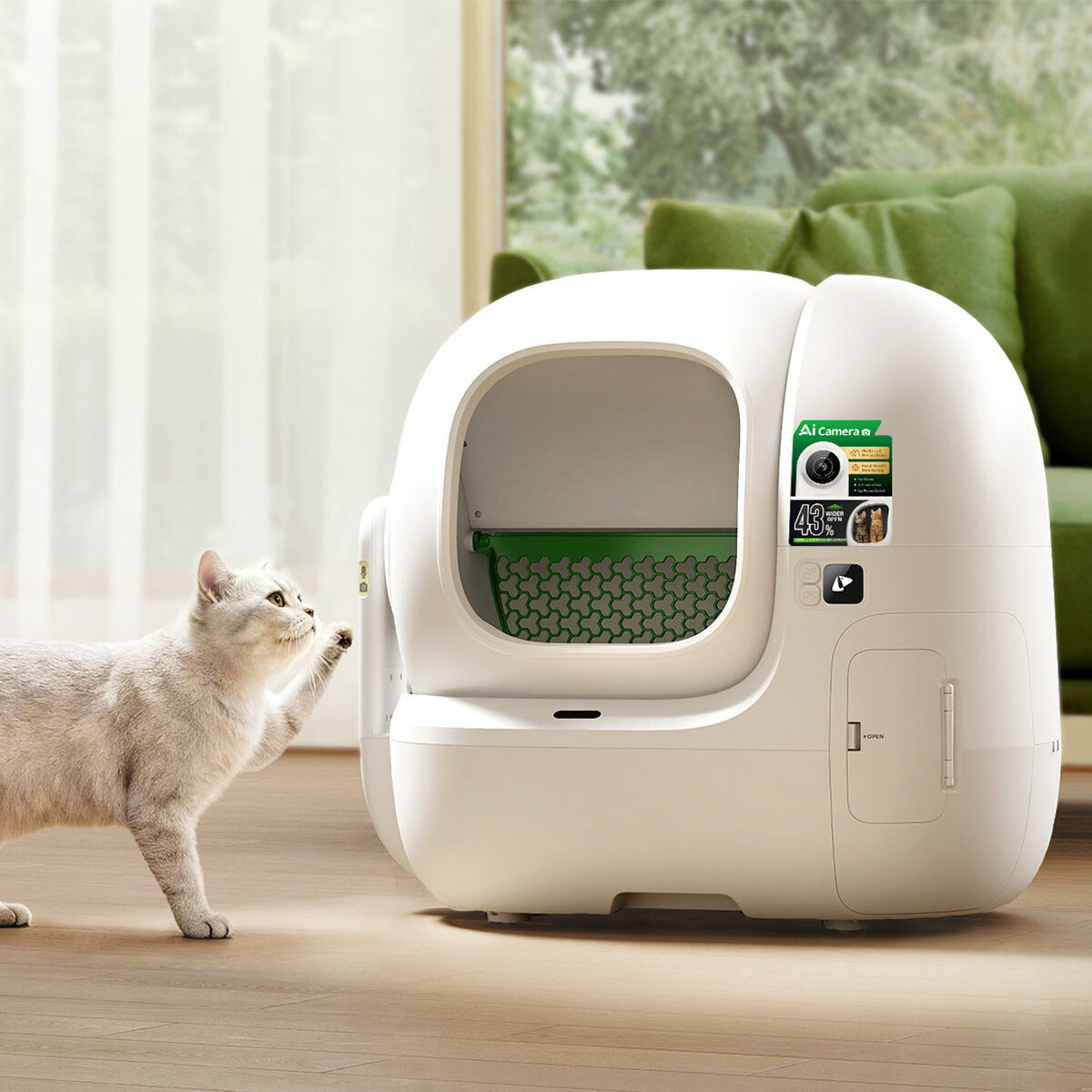
PETKIT PuraMax 2
from
$399
An app-controlled automatic litter box with a low-entry design and triple odor control for multi-cat homes.
Pros
- + Low 7.8-inch entry suits older or short-legged cats
- + Triple odor removal system with sealed waste bin and smart spray
- + App tracks individual cat weight and usage patterns
Cons
- – Not compatible with crystal litter
- – Some users report a learning curve during initial setup
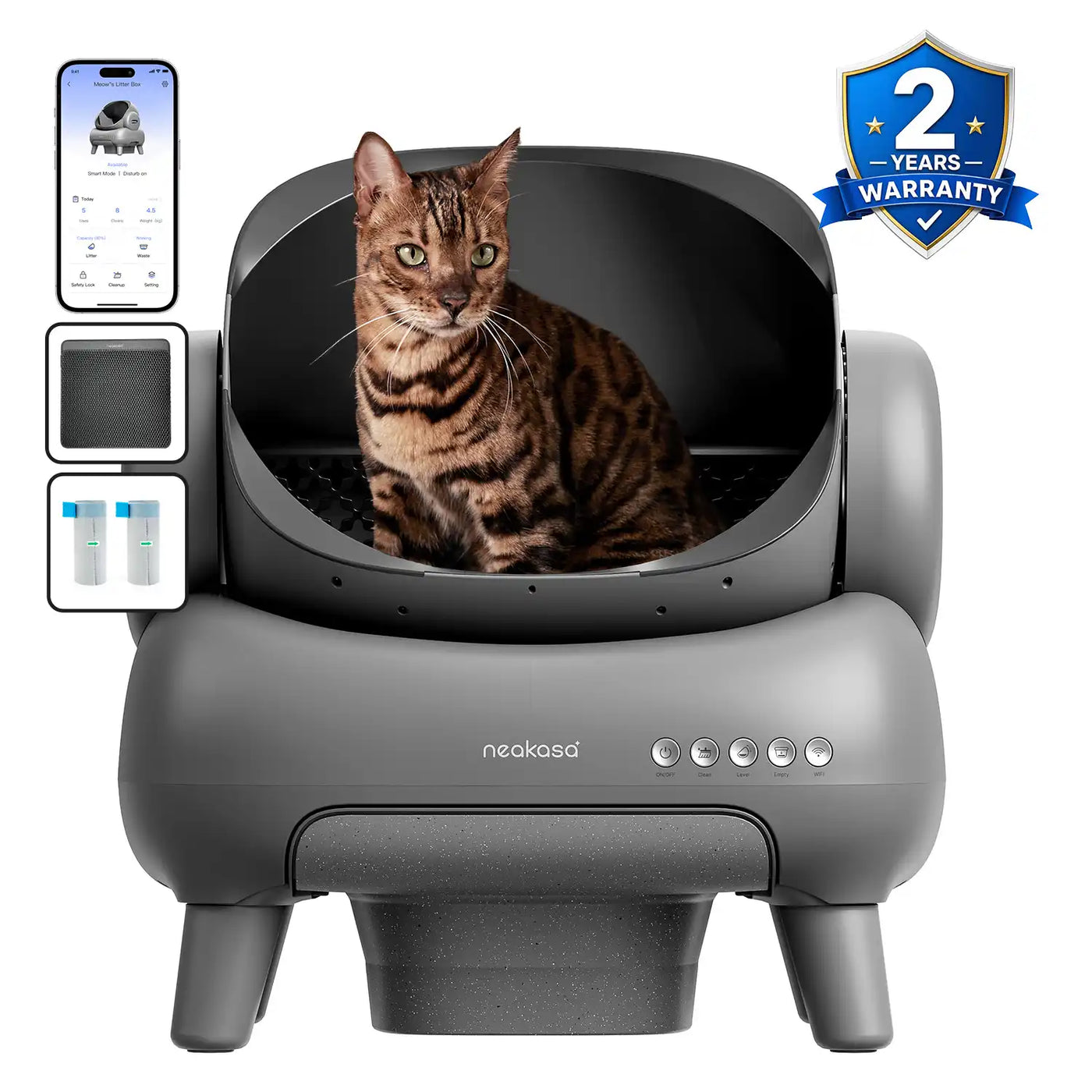
Neakasa M1 Plus
from
$499.99
An open-top self-cleaning litter box designed for large breeds and cats that dislike enclosed automatic boxes.
Pros
- + Open-top design gives cats visibility and reduces claustrophobia compared to enclosed models
- + Highest published weight capacity in the category, suited to Maine Coons and similar breeds
- + Pull & Wrap system seals waste without direct contact
Cons
- – Open top can allow more litter scatter than fully enclosed designs
- – Backward rotation mechanism differs from more established sifting designs
The verdict
Our top picks at a glance
Multi-cat households wanting hands-off waste removal and usage tracking
Owners of large or nervous cats who prefer an open, unconfined litter box design
At a glance
How they compare
| Spec | Top pickWhisker Litter-Robot 4 | PETKIT PuraMax 2 | Neakasa M1 Plus |
|---|---|---|---|
| Price | $699 | $399 | $499.99 |
| Waste bin | — | 7L, up to 15 days for one cat | 11.23L, up to 14 days per cat |
| Check price → | Check price → | Check price → |
If you want the most hands-off waste removal with real usage data, the Whisker Litter-Robot 4 ($699) is the one to buy. It’s the priciest of the three, but its sifting mechanism and app tracking have the strongest track record for reliability in multi-cat homes. If you need something gentler on the budget with a low step-in height, the PETKIT PuraMax 2 ($399) is the better fit. And if your cat is a large breed or just hates feeling boxed in, the Neakasa M1 Plus ($499.99) is the only open-top option of the group.
All three are legitimate upgrades over a scoop and a manual box. Here’s how they actually differ, and how to pick the right one for your household.
Whisker Litter-Robot 4: best for multi-cat homes that want hands-off cleaning
The Litter-Robot 4 is a globe-shaped unit that sifts waste after every single use rather than running on a timer, which matters in a house with more than one cat using the box throughout the day. It handles up to 4 cats, has a wide opening that fits both kittens and larger breeds, and syncs to the Whisker app over WiFi so you can see waste levels, litter status, and each cat’s weight trends over time.
Specs: capacity for up to 4 cats, 1-year warranty with a 90-day trial, WiFi connectivity via the Whisker app, sealed waste drawer with a carbon filter, and a cat weight range of 3 to 25 lbs.
Owner reviews consistently point to clean sifting with little clumped litter sticking to the globe walls, which is one of the more common complaints about lower-end automatic boxes. The app is genuinely useful, not just a gimmick, giving you an early warning if a cat’s weight or bathroom habits shift.
- Pro: Sifts after every use and separates waste cleanly, so it doesn’t sit and smell between cycles.
- Pro: App-based weight and habit tracking is one of the best implementations in the category.
- Con: The drawer-full sensor can misfire and ask for recalibration.
- Con: You’ll still need to wipe down components by hand periodically. Maintenance work is reduced, not eliminated.
This is the pick for households that want the most automation and don’t mind paying for it.
PETKIT PuraMax 2: best for multi-cat homes needing a low entry and odor control
The PuraMax 2 is built around two things: accessibility and smell. Its entry height is just 7.8 inches, noticeably lower than most enclosed automatic boxes, which makes it a smart choice for older cats, kittens, or anyone with joint issues who might struggle to climb into a taller unit. It pairs that with a triple odor-control system, a sealed waste bin, and a smart spray, which together seem to punch above its price on odor containment.
Specs: xSecure safety system combining infrared and weight sensors, a 7L waste bin rated for up to 15 days with one cat, a 76L interior cylinder, and compatibility with clay, tofu, bentonite, and mixed clumping litters.
It’s app-controlled and tracks individual cat weight and usage, similar to the Litter-Robot, though at a lower price point. The trade-off is that it’s not compatible with crystal litter, and some owners report a bit of a learning curve getting the initial setup and litter fill right.
- Pro: Lowest entry height here, genuinely helpful for senior cats.
- Pro: Sealed bin plus smart spray keeps odor down between empties, useful for multi-cat homes producing more waste volume.
- Con: No crystal litter support narrows your litter options.
- Con: Initial setup isn’t as plug-and-play as some owners expect.
Neakasa M1 Plus: best for large or nervous cats that dislike enclosed boxes
The M1 Plus takes a different approach entirely: it’s open-top, no dome, no tunnel. For cats that get anxious in enclosed automatic boxes, or for breeds too big to comfortably use a globe-style unit, this matters more than any smart feature. It’s rated for cats up to 33 lbs, the highest published weight capacity of the three, which makes it the practical option for Maine Coons and similarly large cats.
Specs: 11.23L waste bin rated for up to 14 days per cat, six infrared sensors plus weight sensors, a Pull & Wrap sealed bagging system for waste disposal, and 7.17L litter capacity.
The Pull & Wrap system seals waste into a bag without you touching it directly, which is a nice middle ground between a fully sealed drawer and a manual scoop. Because there’s no cover, though, expect more litter tracking and scatter around the box than you’d get from the Litter-Robot or PuraMax 2. The rotation mechanism also works backward compared to more established sifting designs, which takes a cycle or two to trust.
- Pro: Open design reduces the claustrophobia some cats feel in domed automatic boxes, which research on litter box avoidance suggests can meaningfully improve usage.
- Pro: Highest weight capacity of the three, built for large breeds.
- Con: More scatter potential since there’s no enclosure trapping litter.
- Con: The backward rotation mechanism is less proven than traditional sifting designs.
What litter to use in a self-cleaning box
Use a high-quality, hard-clumping litter, not pine, wood pellets, or crystal litter. Pellets are too large and will jam the sifting mechanism, and crystal litter doesn’t clump, so liquid waste doesn’t get removed as cleanly as it does with clumping litter. Manufacturers are specific about this for a reason: using the wrong litter is one of the most common causes of a rake jamming or a box scooping poorly. If you’re using Tidy Cats clumping litter or a similar clay-based clumping formula, check the manufacturer’s compatibility list first. The PuraMax 2, for example, supports clay, tofu, bentonite, and mixed clumping litters, but not crystal.
Are self-cleaning litter boxes safe for cats?
For most healthy adult cats between roughly 3 and 30 pounds, automatic litter boxes from established brands are considered safe by veterinarians, and a 2024 survey of 287 feline veterinarians found 76% recommend automatic litter boxes to appropriate clients. The real risk is concentrated in specific groups: kittens under 3 lbs, cats with severe arthritis or mobility issues, and cats with significant anxiety around enclosed or moving spaces. Malfunction risk is real but rare with reputable brands; it’s a bigger concern with cheap, unbranded imports that skimp on safety sensors. If you’re introducing a nervous cat to an automatic box, leave it unplugged for the first one to two weeks and scoop it manually so the cat can get used to the space before the mechanism ever activates.
Do self-cleaning litter boxes actually control odor better?
Yes, generally, because they remove waste and seal it away immediately instead of letting it sit in the open. That immediate removal also matters for hygiene: the CDC recommends daily scooping to keep Toxoplasmosis spores from becoming infectious, and an automatic box effectively does that instantly after every use rather than once a day. The flip side is real too: a poorly designed automatic box, or one that isn’t emptied and cleaned on schedule, can end up smelling worse than a plain box because waste and residue harden in hidden corners over time. Odor control depends as much on your maintenance schedule as on the hardware.
What a sifting litter box actually does differently
A sifting litter box uses a motorized rake or rotating mechanism to separate clumps from clean litter and drop the waste into a sealed compartment, usually within seconds to minutes of your cat leaving the box. That’s the core mechanical difference from a manual box, where a clump might sit for hours before you notice it. It’s also why litter choice matters so much: a rake can only sift what it’s designed to handle, and low-quality or incompatible litter is one of the most common reasons owners report a box scooping poorly or jamming.
Does cat litter leave oil stains, and does that affect self-cleaning boxes?
Some clumping litters, especially certain clay-based formulas, can leave a slightly oily or waxy residue on flooring or on the interior of a litter box over time, particularly if the litter gets tracked and ground in before it’s swept up. In a self-cleaning box, that residue can build up in hidden corners and around the rake mechanism if you skip the weekly deep clean, giving bacteria and mold something to grow on. It’s not a dealbreaker, but it’s a reason to stick to the monthly full litter swap and weekly wipe-down manufacturers recommend, rather than assuming the machine handles all the cleaning for you.
How to choose between these three
- Household size: One self-cleaning box is usually fine for 2 to 5 cats, but the Litter-Robot’s per-use sifting and higher stated capacity make it the safer bet for a busier multi-cat household.
- Cat size and age: Go with the PuraMax 2 for older or short-legged cats because of the low entry, and the M1 Plus for large breeds thanks to its 33 lb weight capacity.
- Temperament: A cat that’s ever avoided an enclosed box, or seems anxious around moving parts, will likely do better with the open-top M1 Plus.
- Budget: The PuraMax 2 is the most affordable route into automatic cleaning without giving up app tracking; the Litter-Robot and M1 Plus cost more but each solve a specific problem (capacity and tracking, or size and openness) that the PuraMax 2 doesn’t fully address.
- Maintenance tolerance: All three still need scooping of missed clumps, weekly cleaning, and a full litter change every 2 to 4 weeks. None of them are truly zero-maintenance, they just cut the daily scooping out of your routine.
None of these is a bad choice, but they’re solving different problems. Match the box to your cat’s size and temperament first, then let budget and app features decide the rest.
Keep reading
- Petkit litter box
- Arm & hammer cat litter
- Cat litter
- Large cat litter box
- World’s Best Cat Litter Multi-Cat review
- Fresh step cat litter
- Breeze litter box
- Cat litter mat
Sources
- The best self-cleaning litter boxes in 2026: Tested and reviewed | CNN Underscored
- The 4 Best Automatic Litter Boxes To Win Over Picky Cats | Forbes
- Are Automatic Litter Boxes Safe for Cats? Safety Guide & Health Impact Analysis
- Are Automatic Litter Boxes Safe? Risks and Benefits (2026) | Petful
- Smart Litter Box Safety: Are They Truly Safe for Cats? – Meowant
- Automated Litter Boxes Are Putting Cats at Risk | Figo Pet Insurance
- 7 Best Automatic Litter Boxes in 2026 (We Tested Over 30 Models) - Cats.com
- Can You Use Regular Cat Litter in a Self-Cleaning Litter Box? | UAH Pet
- How to Choose the Best Litter for Automatic Litter Box | Meowant
- What Is The Best Litter for Litter-Robot? Official Guide | Whisker
- What is the Best Litter for Your Automatic Litter Box? | ARM & HAMMER
- Self-Cleaning Litter Box Worth It? 2026 Analysis | Home Run Pet
FAQ
Frequently asked questions
- What is the best cat litter for odor control in a self-cleaning box?
- A high-quality, hard-clumping litter, whether clay or tofu-based, tends to control odor best in automatic boxes because it clumps liquid waste tightly enough for the sifting mechanism to remove it cleanly. Crystal litter absorbs odor well but doesn't clump, so liquid waste lingers longer than it would with a clumping formula. Always check the manufacturer's compatibility list, since not every box supports every litter type.
- Can I use Tidy Cats clumping litter in a self-cleaning litter box?
- Most hard-clumping clay litters, including standard Tidy Cats clumping formulas, work in automatic litter boxes as long as the manufacturer lists clay clumping litter as compatible. Confirm compatibility with your specific model first, since some units, like the PETKIT PuraMax 2, support clay and clumping litters but exclude crystal litter entirely.
- How long do self-cleaning litter boxes typically last?
- Most self-cleaning litter boxes last three to seven years, with lifespan driven largely by how well they're maintained and how much litter is used per cycle. Overfilling the litter chamber puts extra strain on the rake or rotating mechanism and can shorten motor life, so following the manufacturer's fill line matters more than most owners expect.
- Is a sifting litter box worth it for a multi-cat household?
- Yes, for most multi-cat homes a single self-cleaning box can replace multiple traditional boxes, since research suggests one automatic unit typically suits 2 to 5 cats. That said, smaller waste bins under roughly 70 liters of capacity struggle with multiple cats and need emptying every 2 to 3 days, which cuts into the convenience you're paying for.