Buying guide
Best clumping cat litter in 2026: 2 formulas worth your money
By Priya Novak · Senior writer · Reviewed by Grant Reyes
Last updated
We earn commissions from links on this page, at no cost to you. Our picks stay independent. Prices are indicative and were last checked around publication — they change often, so confirm the current price on the retailer’s site. How we research & rank →
Our picks
Ranked, with the trade-offs

World's Best Corn Multi-Cat
from
$34.95
A corn-based clumping litter built for multi-cat homes that flushes and composts instead of piling up in the trash.
Pros
- + Long-lasting whole-kernel corn formula reduces how often you change the box
- + Forms quick, tight clumps that are easy to scoop
- + Flushable and compostable for easier disposal
Cons
- – Some users report the formula tracks more than clay alternatives
- – Granule size can feel large compared to fine clay litters
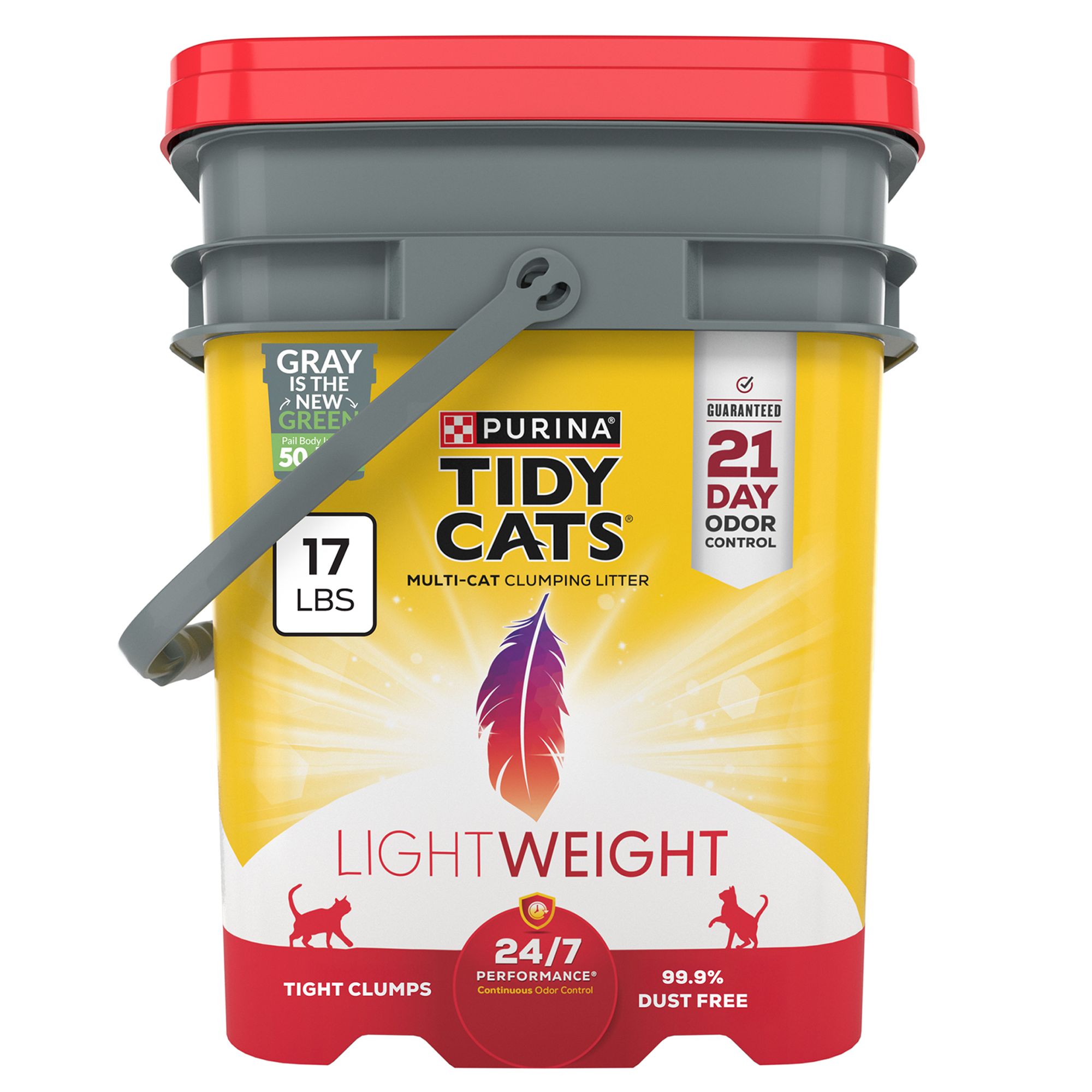
Tidy Cats LightWeight 24/7
from
$21.99
A lightweight clumping clay litter built for multi-cat homes with round-the-clock odor blocking.
Pros
- + Much easier to carry and pour than standard clay litter
- + Strong, tight clumps simplify scooping
- + Slow-release deodorizing system for continuous odor control
Cons
- – Scented formula may bother sensitive cats or owners
- – Still clay-based so not flushable or biodegradable
The verdict
Our top picks at a glance
Owners wanting a plant-based, flushable litter for multiple cats
Multi-cat households wanting a lighter bag to carry without sacrificing odor control
At a glance
How they compare
| Spec | Top pickWorld's Best Corn Multi-Cat | Tidy Cats LightWeight 24/7 |
|---|---|---|
| Price | $34.95 | $21.99 |
| Scent | Unscented | Clean Linen scented |
| Check price → | Check price → |
The short answer
If you want the strongest odor control and the easiest scoop for a multi-cat home, go with Purina Tidy Cats LightWeight 24/7 Performance Clumping Multi-Cat Litter. It’s a clay-based clumping formula built specifically for busy boxes, and it’s roughly half the weight of standard clumping clay, so hauling bags in from the car doesn’t wreck your back. If you’d rather skip clay altogether and want something flushable and compostable, World’s Best Cat Litter Multi-Cat Unscented Clumping Corn Cat Litter is the better fit, though it comes at a higher price and tracks a bit more.
Both are marketed for multi-cat households, both clump, and both claim low dust. The decision comes down to material (clay vs. corn), disposal method, and how much you care about scent.
Why clumping matters more than you’d think
Clumping isn’t just a marketing term. Traditional clumping litters use sodium bentonite clay, which swells and can absorb several times its own weight in liquid, forming a tight, scoopable mass around waste instead of leaving a saturated mess behind. That seal effect is a big part of why clumping formulas outperform non-clumping litter on odor: they trap moisture and smell in a contained clump you remove daily, rather than letting urine sit and permeate the whole box. Research on litter box preference has also found cats use clumping clay more readily than crystal litter, largely because of that superior odor control.
Plant-based clumping litters like the corn formula here work similarly, just with a different raw material. Corn starches swell and bind when wet, forming clumps that hold together for scooping, without the mineral clay base.
Purina Tidy Cats LightWeight 24/7 Performance Clumping Multi-Cat Litter — best for multi-cat homes that want a lighter bag
This is a clay-based clumping litter engineered for households running more than one litter box (or more than one cat sharing a box), with a slow-release deodorizing system Purina says blocks ammonia odor for up to 21 days. The headline feature is the weight: it’s built to be half the weight of a standard clumping clay litter, which matters a lot if you’re carrying bags upstairs or buying in bulk.
Specs: Clean Linen scented; 99.9% dust free; clumping clay; blocks ammonia odor up to 21 days; half the weight of leading clumping litter.
Pros:
- Much easier to carry and pour than standard clay litter
- Strong, tight clumps make scooping straightforward
- Slow-release deodorizing system for continuous odor control
Cons:
- Scented formula may bother sensitive cats or owners who prefer fragrance-free
- Still clay-based, so it isn’t flushable or biodegradable
This is the pick for anyone prioritizing day-to-day odor control and easy handling over eco-credentials. It’s also the more affordable of the two.
World’s Best Cat Litter Multi-Cat Unscented Clumping Corn Cat Litter — best for flushable, plant-based disposal
This one swaps clay for whole-kernel corn. It’s unscented, forms tight clumps, and is flushable and septic-safe, so you’re not hauling heavy clay bags to the trash every week. Cats.com and other independent litter roundups regularly flag corn and other plant-based litters as a solid middle ground between traditional clay and pricier tofu litters.
Specs: Unscented; forms tight clumps; flushable and septic-safe; whole kernel corn; 99% dust-free.
Pros:
- Long-lasting whole-kernel corn formula means less frequent full box changes
- Forms quick, tight clumps that scoop cleanly
- Flushable and compostable, which simplifies disposal
Cons:
- Some owners report more tracking than clay alternatives
- Granule size can feel large next to fine clay litter
It’s the pricier option here, but if flushability and a plant-based ingredient list are non-negotiable for you, it’s worth the premium.
Best cat litter for odor control
For pure odor control, clumping clay litter with a built-in deodorizing system, like the Tidy Cats formula above, tends to outperform other types because it both absorbs liquid aggressively and seals odor into a removable clump. The clumping action itself is doing most of the work: by locking waste into a tight mass, it minimizes contact between urine and air, which is where most litter box odor originates. Scented formulas add a layer on top, but they’re not a substitute for daily scooping. No litter, however good, replaces that habit.
Tidy Cats clumping litter: what makes it different
Tidy Cats’ clumping lines are built around clay’s natural swelling capacity, then layered with odor-blocking technology and, in the LightWeight version, a reduced-weight formula. The tradeoff for that convenience is that it’s still mined clay: heavier on the environment than plant-based litters and not something you can flush. If lighter bags and long odor control matter more to you than disposal method, it’s a strong, budget-friendly choice.
Do you need a sifting litter box for clumping litter?
A sifting litter box isn’t required for clumping litter, but it can speed up scooping in multi-cat homes. Sifting boxes use a slotted insert that lets you shake loose litter through while clumps and debris stay on top, which is handy with heavier-traffic boxes but not essential if you’re already scooping daily with a standard scoop. Either clumping litter here works fine in a standard box; a sifting system is more about your cleaning workflow than the litter itself.
What causes cat litter oil stains, and how to prevent them
Oily-looking stains on the bottom of a litter box usually come from natural fats in a cat’s urine or feces bonding with plastic, especially in warm conditions or when litter sits too long between full changes. It’s more common with clay litters that don’t fully lock moisture into clumps, and it tends to get worse the longer the box goes without a deep clean. Lining the box, doing a full litter change and scrub on a regular schedule, and using a litter with strong clumping performance (like either option above) all help reduce buildup, since less liquid ever reaches the plastic surface.
Dust and safety: what the research actually says
Clumping clay litter can contain crystalline silica, and inhaling dust from it has raised respiratory concerns for both cats and owners, particularly people with asthma or other sensitivities. Regulatory reviews in Europe have found no adverse health risk from crystalline silica in mineral-based pet litter under normal use, but low-dust formulations are still worth prioritizing if anyone in the house has respiratory issues. Both litters featured here claim high dust-free ratings (99.9% and 99% respectively), which puts them ahead of older, dustier clay formulas.
One separate note for kitten owners: clumping clay litter isn’t recommended for kittens under about three months old, since ingested clumping clay can harden in the digestive tract. If you have a young kitten in the house, use a non-clumping or paper-based litter until they’re older, or lean toward a natural clumping option like the corn formula here, which breaks down when wet rather than solidifying.
How to choose between these two
- Pick the Tidy Cats LightWeight formula if you manage multiple cats or boxes, want strong built-in odor control, and would rather carry a lighter bag than worry about biodegradability.
- Pick World’s Best Cat Litter if you want an unscented, plant-based litter you can flush or compost, and you’re fine with paying more and dealing with slightly more tracking.
- Either way, scoop daily. No clumping formula, however well-engineered, makes up for an infrequently cleaned box, and daily scooping is still the single biggest factor in odor control and litter box acceptance.
Keep reading
- Dr. Elsey’s Ultra Unscented Clumping review
- World’s Best Cat Litter Multi-Cat review
- Fresh step cat litter
- Arm & hammer cat litter
- Cat litter
- Petkit litter box
- Purina Tidy Cats Free & review
- World’s Best Cat Litter Multi-Cat vs Fresh Step Extreme Clumping Litter
Sources
- The Best Litter for Cats According to Vet Studies - Litter Robot
- Cat Litter Clump Strength: A Simple, Real-Life Test - Purrinlitter
- The 11 Best Clumping Cat Litters in 2026 - Cats.com
- An odor-reducing, low dust-forming, clumping cat litter from Eastern red cedar - ScienceDirect
- The Science of Clumping Cat Litter - Best Fur Forward
- Cat Litter Safety: A Vet-Approved Guide - Catster
- A Guide To Litter Box Etiquette - Texas A&M School of Veterinary Medicine
- The Ultimate Guide to Cat Litter - Animal Welfare Association
- Pros & Cons of Clay Cat Litter - Tuft & Paw
- FAQ on the safety of clay-based pet litter - EUBA
- Airborne silica from bentonite clay cat litter - ToxStrategies
- Is cat litter dust harmful to you and your cat? - Catit
FAQ
Frequently asked questions
- Is clumping litter safe for kittens?
- Clumping clay litter isn't recommended for kittens under roughly three months old, since ingested clay can clump and harden inside the digestive tract. Verified obstruction cases are rare, but vets generally advise non-clumping or paper litter for young kittens, switching to clumping clay once they're older. Plant-based clumping litters, like corn, are considered lower-risk since they break down rather than harden when wet.
- Is corn litter as good as clay for clumping?
- Whole-kernel corn litter, like World's Best Cat Litter's Multi-Cat formula, forms tight, scoopable clumps comparable to clay, though granule size tends to be larger and it can track more around the box. It won't absorb quite as aggressively as bentonite clay, but it makes up for that with flushability and compostability, which clay can't offer.
- Does scented litter actually help with odor control?
- Scented litter adds fragrance on top of a litter's underlying odor-absorbing materials, but the clumping action itself, sealing waste into a removable mass, does most of the actual odor-control work. Quality clumping litters don't need heavy fragrance to control smell; scent is more about personal preference, and some cats are sensitive to it.
- How often should I fully change clumping litter, not just scoop it?
- Most owners fully dump and replace clumping litter every two to four weeks, depending on how many cats use the box and how diligently you scoop daily. Daily scooping removes clumps and buildup, but residual moisture and odor accumulate over time even in clumping formulas, so a full change and box scrub on a regular schedule prevents lingering smell and oily residue.