Buying guide
Best Cat Litter for Odor in 2026: 4 Formulas That Actually Work
By Priya Novak · Senior writer · Reviewed by Grant Reyes
Last updated
We earn commissions from links on this page, at no cost to you. Our picks stay independent. Prices are indicative and were last checked around publication — they change often, so confirm the current price on the retailer’s site. How we research & rank →
Our picks
Ranked, with the trade-offs

World's Best Corn Multi-Cat
from
$34.95
A corn-based clumping litter built for multi-cat homes that flushes and composts instead of piling up in the trash.
Pros
- + Long-lasting whole-kernel corn formula reduces how often you change the box
- + Forms quick, tight clumps that are easy to scoop
- + Flushable and compostable for easier disposal
Cons
- – Some users report the formula tracks more than clay alternatives
- – Granule size can feel large compared to fine clay litters
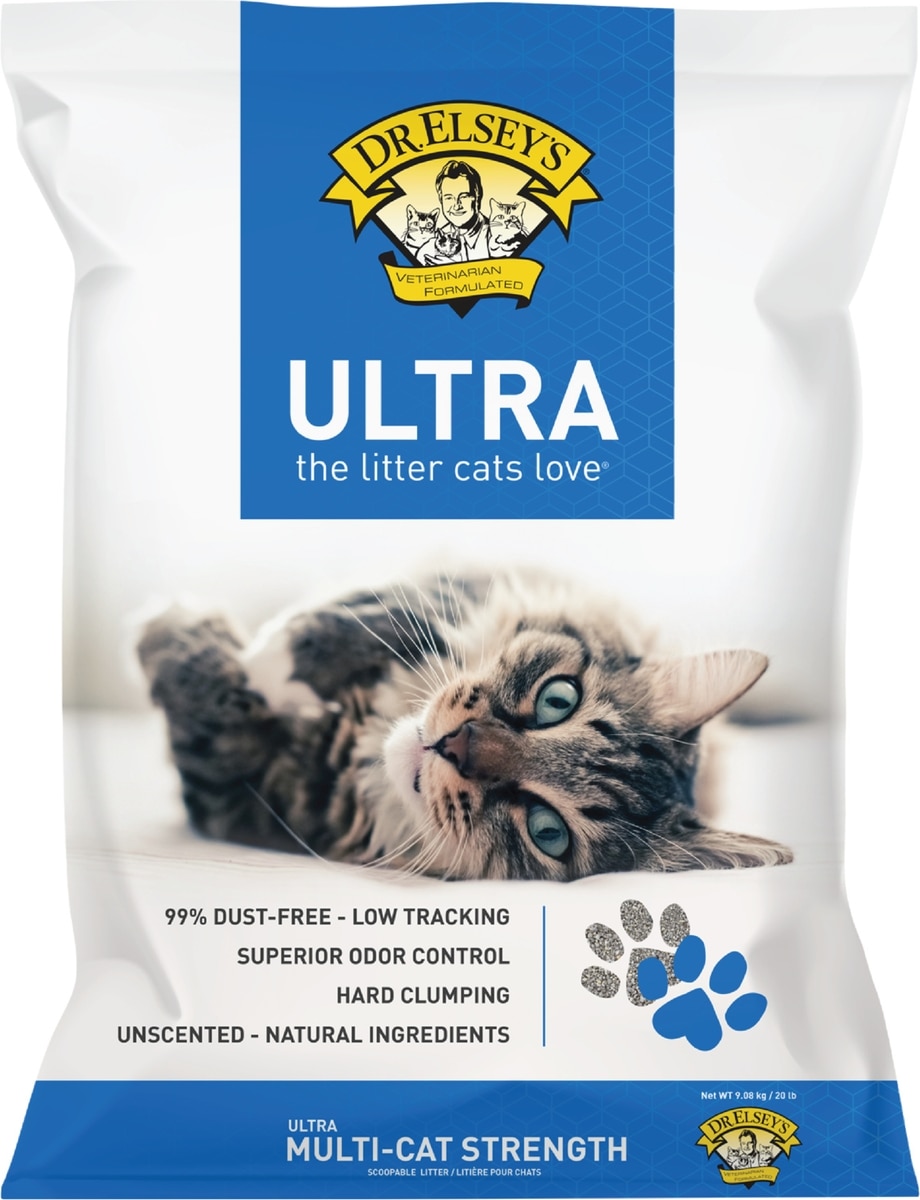
Dr. Elsey's Ultra Unscented
from
$24.99
A vet-formulated bentonite clay litter combining heavier granules with hard clumping for multi-cat and mechanical litter boxes.
Pros
- + Hard clumps resist crumbling, even in mechanical or sifting litter boxes
- + Controls odor naturally without perfumes or deodorants
- + Low-dust formulation suited to allergy-prone households
Cons
- – Very hard clumps can be difficult to scrape from plastic litter boxes
- – Heavier clay formula makes bags harder to carry

Arm & Hammer Clump & Seal
from
$22.78
A clay clumping litter that uses moisture-activated micro-granules and baking soda to seal in odors for multi-cat homes.
Pros
- + Strong, easy-to-scoop clumps that resist crumbling
- + Widely available at major retailers
- + Low-dust pouring formula
Cons
- – Heavier clay bag can be difficult to carry
- – Some users find the scented versions too strong
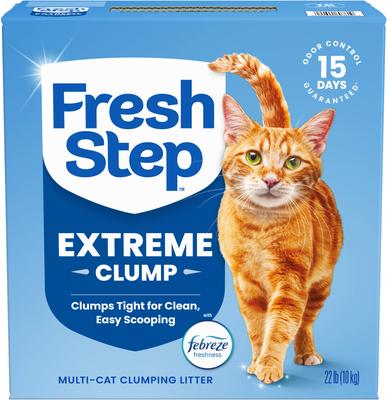
Fresh Step Extreme Febreze
from
$21.98
A clay clumping litter combining activated charcoal, Ammonia Block technology, and Febreze scent for extended odor control in multi-cat homes.
Pros
- + Long guaranteed odor-control window
- + Tight clumps simplify daily scooping
- + Compatible with automatic litter boxes
Cons
- – Some users report a noticeable dust cloud when pouring
- – Fragrance may be too strong for scent-sensitive households
The verdict
Our top picks at a glance
Owners wanting a plant-based, flushable litter for multiple cats
Multi-cat homes and owners using sifting or automatic litter boxes
Multi-cat households wanting a widely available, dust-controlled clumping clay litter
Owners wanting a scented, mass-market clumping litter with a long odor-control guarantee
At a glance
How they compare
| Spec | Top pickWorld's Best Corn Multi-Cat | Dr. Elsey's Ultra Unscented | Arm & Hammer Clump & Seal |
|---|---|---|---|
| Price | $34.95 | $24.99 | $22.78 |
| Scent | Unscented | Unscented | — |
| Clumping | Yes, tight clumps | Hard clumping, won't break apart | — |
| Material | Whole kernel corn | 100% bentonite clay | Clay/Bentonite with baking soda |
| Dust level | 99% dust-free | 99.9% dust-free, hypoallergenic | — |
| Check price → | Check price → | Check price → |
Top 3 of 4 shown — full shortlist above.
The best cat litter for odor control clumps fast, traps ammonia physically, and gets scooped daily, not the one with the strongest perfume. After comparing spec sheets and owner reviews across the major clumping formulas, my top pick for most multi-cat homes is Fresh Step Extreme Clumping Cat Litter with Febreze Freshness, because it pairs activated carbon with a long guaranteed odor window. It’s not the right call for every household, and I’ll explain who should choose each of the other three instead.
Why most odor-control claims are half true
Odor control comes down to three mechanisms: absorbing moisture so bacteria can’t multiply, neutralizing the pH of ammonia, and physically trapping odor molecules before they escape into the room. Fragrance masks the smell temporarily, and once the scent fades, whatever odor problem existed underneath is fully exposed. Boxie Cat’s litter learning center walks through this same breakdown of moisture control, pH, and molecular trapping as the three real levers a litter has to pull.
This matters because baking soda, the ingredient most litter marketing leans on, is weaker than most buyers assume. Baking soda neutralizes acids, but the ammonia in cat urine is alkaline, so the two only react weakly, a point covered in detail by MyCatJournal’s explainer on why cat litter smells like ammonia, which draws on findings published in the Journal of the American Veterinary Medical Association. Independent lab comparisons of common litter additives, cited by Buggaz’s overview of how litter controls odor, consistently rank activated carbon ahead of zeolite and baking soda for ammonia absorption, though exact percentage figures vary by test method and aren’t something I’d treat as fixed lab constants. Baking-soda litters aren’t useless, but a litter’s real odor performance depends more on its clumping chemistry and any carbon content than on how strongly it’s scented or what the front of the bag promises.
Clumping quality is the other half of the equation and deserves more attention. Litter that forms a solid clump quickly encapsulates urine before much ammonia forms, because the window for odor production is short once urine hits the tray. If clumps stay soft or crumble during scooping, ammonia-soaked litter gets left behind in the box even after you’ve cleaned it. The Heusner and D’Agostino (2021) clumping litter study, referenced by MyCatJournal, ties this directly to how much residual ammonia builds up between cleanings. Sodium bentonite clay is generally the most reliable clumper for this reason, forming hard clumps that hold together well enough for efficient waste removal. The AAHA’s recommendations, cited by PetSmart’s litter care guide, call for daily scooping regardless of which litter you use, since even the best clumping chemistry can’t fully compensate for a box that sits unscooped for days.
Fresh Step Extreme Clumping Cat Litter with Febreze Freshness — best overall for odor control
Fresh Step Extreme combines high-quality clay with activated carbon and what the brand calls Ammonia Block technology, then layers Febreze scent on top. That carbon inclusion is the meaningful part: activated carbon shows up repeatedly in independent comparisons as one of the stronger odor absorbers among common litter additives, and Fresh Step is one of the few mass-market clumping litters that actually uses it rather than relying on fragrance or baking soda alone.
The clumps form tight and resist crumbling, which simplifies daily scooping, and the formula is compatible with automatic litter boxes. Fresh Step’s packaging advertises up to 15 days of odor control. I haven’t seen that figure independently verified against a controlled multi-cat test, so treat it as the manufacturer’s best-case claim rather than a guarantee you can skip scooping to reach. In a two- or three-cat home, odor control in practice will likely fall short of that ceiling well before day 15. The 22-pound box is lighter to carry than the clay bags below, but you’re getting less litter per package, which means more frequent restocking in a busy multi-cat household.
Pros: long advertised odor-control window; tight clumps that simplify daily scooping; works in automatic litter boxes.
Cons: some owners report a noticeable dust cloud when pouring; the Febreze fragrance may be too strong for scent-sensitive households or scent-sensitive cats. PetSmart’s learning center, citing Cornell University research on litter preferences, notes that many cats actually favor unscented litter, and strong fragrance can discourage box use in scent-sensitive cats.
Best for: owners who want a scented, widely available clumping litter with real odor-fighting chemistry behind the marketing, and who scoop daily rather than relying on the guarantee window alone.
Arm & Hammer Clump & Seal Multi-Cat Complete Odor Sealing Clumping Cat Litter — best for multi-cat households on a budget
This is a clay clumping litter built around moisture-activated micro-granules layered with baking soda, marketed specifically for multi-cat homes. Given what the research on ammonia chemistry shows about baking soda’s limited reaction with an alkaline compound, the odor control here is likely doing more work through the clumping clay itself and the sealing granules than through the baking soda component, whatever the label implies.
Where it earns its keep is clump strength and availability. The rock-hard clumps resist crumbling during scooping, which matters more for actual odor control than any single additive, since better clumps mean less lingering urine and less ammonia release over time. It’s also sold everywhere, so restocking is never a hassle, and the pouring formula is rated 99.9% dust-free. Arm & Hammer backs it with a 7-day odor control guarantee, printed on package, a more modest claim than Fresh Step’s and one that’s easier to hold the product to.
Pros: strong, easy-to-scoop clumps that resist crumbling; widely available at major retailers; low-dust pouring formula.
Cons: the 38-pound bag is heavy and awkward to carry; some scented versions are strong enough to bother scent-sensitive cats or people.
Best for: multi-cat households that want dependable clumping clay at a lower price without hunting for a specialty retailer, and that are comfortable with a more modest, shorter odor-control window in exchange for cost and availability.
Dr. Elsey’s Ultra Unscented Clumping Clay Cat Litter — best for allergy-prone households and mechanical boxes
Dr. Elsey’s skips fragrance entirely and leans on 100% bentonite clay to do the odor work through absorption and pH-neutral trapping rather than masking. That aligns with the Cornell-sourced preference research cited by PetSmart, and it sidesteps the common buyer assumption that a stronger scent equals better odor control. Since clay litter controls odor mainly through physical absorption and clumping speed rather than chemical additives, an unscented formula doesn’t give up much here—the scent was never doing the heavy lifting anyway.
The clumps here are notably hard, described by the brand as won’t-break-apart hard, which is a real asset in sifting or automatic litter boxes where soft clumps disintegrate and jam the mechanism. That same hardness is the formula’s one recurring complaint in owner reviews: some find rock-hard clumps genuinely difficult to scrape off the bottom of a plastic litter box, especially if scooping is delayed a day or two. It’s also rated 99.9% dust-free and hypoallergenic, a meaningful detail for households with cat allergies or asthma, and one that matters more than usual given ongoing concerns about ammonia’s effect on feline respiratory health, as detailed by MyCatJournal.
Pros: hard clumps resist crumbling even in mechanical or sifting boxes; controls odor without perfumes or added deodorants; low-dust formula suited to allergy-prone homes.
Cons: very hard clumps can be tough to scrape from plastic litter pans if scooping lapses; the heavier clay bag is harder to carry than lighter alternatives.
Best for: owners using a sifting litter box or automatic self-cleaning box, or anyone who wants solid odor control without any added fragrance.
World’s Best Cat Litter Multi-Cat Unscented Clumping Corn Litter — best for flushable, plant-based disposal
This is a whole-kernel corn litter, an entirely different base material from the three clay options above. It clumps tightly and quickly, and because it’s plant-based, it’s flushable and septic-safe (check local septic and municipal guidance before flushing) as well as compostable, which clay litter never is. The whole-kernel formula is also long-lasting, which can mean fewer full box changes over a given month.
The trade-off is texture and tracking. Owners report more litter tracked out of the box compared to clay, and the granule size feels large next to fine clay litter, which some cats take time adjusting to. Litter texture is one of the more common reasons cats avoid a newly switched box, so a gradual transition helps here more than with the clay options. It’s unscented, again in line with the feline preference research cited above, and rated 99% dust-free, just a notch below the 99.9% clay options.
Pros: long-lasting corn formula reduces how often you need to fully change the box; forms quick, tight clumps that scoop easily; flushable and compostable for simpler disposal.
Cons: tracks more than clay alternatives; larger granule size may take some cats longer to accept, and switching should be done gradually.
Best for: owners prioritizing flushable, compostable disposal over maximum clump hardness or minimal tracking, and willing to manage a longer adjustment period if their cat is picky about texture.
Sifting litter boxes and what litter works with them
Sifting litter boxes rely on a slotted tray that separates clumps from clean litter, so they need a litter that clumps hard enough to survive shaking without crumbling into the clean layer. Dr. Elsey’s Ultra Unscented is the strongest match among these four for that reason, since its clumps are specifically built to hold together through mechanical handling, though that same hardness is what makes it occasionally hard to scrape off plastic by hand. Arm & Hammer’s rock-hard clumps are a reasonable second choice for sifting setups. Clump hardness, not the odor-additive story, is what determines whether a litter survives sifting intact.
Does baking soda actually control litter odor?
Baking soda has a limited effect on litter odor on its own because it neutralizes acids while the ammonia in cat urine is alkaline, so the chemical reaction between them is weak. This is consistent across the sources reviewed here, from Boxie Cat’s mechanism breakdown to MyCatJournal’s citation of JAVMA-linked research on ammonia formation in litter. Independent comparisons of common additives tend to rank activated carbon ahead of both zeolite and baking soda for ammonia absorption, though the specific percentage figures circulating in litter-brand marketing (including some carbon-additive sellers with an obvious stake in the answer) should be read with skepticism rather than treated as settled lab data. If odor control is the priority, look for activated carbon or charcoal on the label, or lean on a bentonite clay formula’s clumping strength and daily scooping, rather than assuming a baking-soda claim on the front of the bag is doing much chemical work on its own.
Keep reading
- How to get rid of cat litter odor
- Hidden litter box
- Arm & hammer cat litter
- Cat litter
- Petkit litter box
- Large cat litter box
- ARM & HAMMER Clump & review
- World’s Best Cat Litter Multi-Cat review
Sources
- Effective odor control scientific principles - Boxie Cat
- Lab testing: Activated carbon vs zeolite vs baking soda - Purrify
- 90-day activated charcoal vs baking soda test results - Purrify
- Chemistry of ammonia and baking soda reaction - Purrify
- Veterinary study: Cat preference for activated carbon litter - dvm360
- Clumping performance and odor chemistry - Purrify
- Journal of American Veterinary Medical Association: Clay litter ammonia reduction - MyCatJournal
- Clump speed and ammonia formation - Buggaz
- AAHA scooping frequency recommendations - PetSmart Learning Center
- Cornell University on cat litter scent preferences - PetSmart Learning Center
- Heusner & D’Agostino (2021) clumping litter study - MyCatJournal
- Ammonia respiratory health in cats - MyCatJournal
FAQ
Frequently asked questions
- Does activated carbon really control litter odor better than baking soda?
- Independent comparisons of common litter additives generally rank activated carbon ahead of baking soda for ammonia absorption, and the chemistry supports this: baking soda neutralizes acids, while cat urine ammonia is alkaline, so the reaction between them is weak. Exact percentage figures vary by test and source, and some of the most specific numbers circulating online come from carbon-additive sellers with a commercial interest in the answer, so treat any single hard percentage with some caution rather than as an established lab constant.
- Do cats actually prefer unscented litter?
- Research on litter preferences cited by PetSmart's cat care guide, which references Cornell University findings, suggests many cats favor unscented litter over heavily fragranced options, and strong scents can sometimes discourage a cat from using the box. That's a reasonable factor to weigh in a multi-cat home, though individual cats vary and some tolerate scented litter fine.
- How often do I need to scoop to control odor, regardless of litter type?
- The AAHA's scooping recommendations, cited by PetSmart's learning center, call for daily scooping no matter which litter you use. Even the best clumping or carbon-based formula can't fully compensate for a box left unscooped for several days, since ammonia builds up quickly once urine sits in the tray.
- Are odor-control guarantees like '7-day' or 'up to 15 days' verified independently?
- These figures come from the manufacturers' own packaging claims rather than independent third-party testing that this article could verify. Treat longer advertised windows as best-case scenarios rather than guarantees, especially in multi-cat households where usage is heavier than a single-cat test scenario would reflect.
- Is corn litter as effective at odor control as clay?
- World's Best Cat Litter's corn formula clumps tightly and controls odor reasonably well for a plant-based litter, but it isn't chemically boosted with carbon or baking soda the way some clay competitors are. Its main odor advantage comes from flushable, compostable disposal rather than superior absorption, and it does track more than clay.