Buying guide
Best low entry litter box for 2026: two picks worth your money
By Priya Novak · Senior writer · Reviewed by Grant Reyes
Last updated
We earn commissions from links on this page, at no cost to you. Our picks stay independent. Prices are indicative and were last checked around publication — they change often, so confirm the current price on the retailer’s site. How we research & rank →
Our picks
Ranked, with the trade-offs

PetFusion BetterBox Non-Stick
from
$44.95
A durable open-top litter pan with a non-stick coating and low entry for easier cleaning and senior-cat accessibility.
Pros
- + Non-stick coating makes scooping noticeably easier
- + Low entry point suits older or mobility-limited cats
- + More rigid and durable ABS plastic than standard polypropylene pans
Cons
- – Lower walls allow more litter scatter than high-sided boxes
- – No handles, making it awkward to dump out and refill
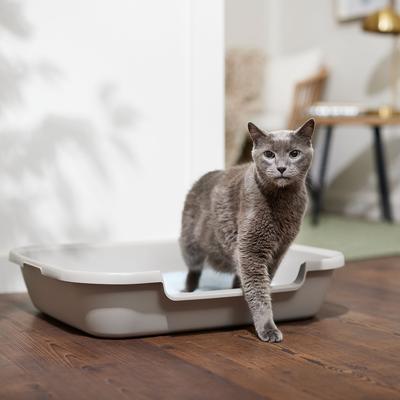
Frisco Senior Kitten Large
from
$27.98
A budget-friendly, wide pan with a 3-inch front cutout designed for both kittens learning the ropes and senior cats with stiff joints.
Pros
- + Very low, wide entry point makes stepping in nearly effortless
- + Lightweight and easy to move or wash in a sink or tub
- + Spacious floor area lets larger cats turn around comfortably
Cons
- – Shallow side walls let litter scatter and urine spray escape more than taller boxes
- – No hood, so it offers less odor containment
The verdict
Our top picks at a glance
Owners with senior cats or anyone wanting an easy-clean manual box
Multi-life-stage households needing one accessible box for both kittens and aging cats
At a glance
How they compare
| Spec | Top pickPetFusion BetterBox Non-Stick | Frisco Senior Kitten Large |
|---|---|---|
| Price | $44.95 | $27.98 |
| Material | ABS plastic with non-stick coating | BPA-free polypropylene |
| Dimensions | 22.6"L x 18.1"W x 8"H | 24" L x 20" W x 5" H |
| Check price → | Check price → |
A low entry litter box is any pan with a front wall short enough (ideally under six inches) that a cat can walk in without lifting a leg or hopping. That single design detail matters more than most owners realize. Veterinary consensus holds that the ideal entry height is no more than six inches, roughly 65-75% of your cat’s shoulder height, so she can step in with minimal effort. For this guide I compared two widely-available low entry boxes against that standard, plus AAHA/AAFP sizing guidance and owner-reported durability, to figure out who each one actually suits.
My top pick for most households is the PetFusion BetterBox. It combines a genuinely low entry point with a non-stick ABS coating that makes daily scooping less of a chore, and the more rigid plastic holds up better over time than the flimsier polypropylene pans this category is usually built from. If you’re shopping for a mixed household with a kitten and an older cat, or want to spend less, the Frisco Senior & Kitten box is the better fit, and I explain why below.
Why entry height matters more than most litter box shopping guides admit
About half of cats over age 10 develop arthritis or other mobility problems, according to research published in the Journal of Feline Medicine & Surgery. That’s close to a coin flip for any cat past middle age. The 2021 AAHA/AAFP Feline Life Stage Guidelines are explicit that box edges should not be too high for a kitten or senior cat to enter and exit easily, and the mechanism behind that guidance is worth understanding, not just following.
When a cat is in pain, she often can’t posture correctly inside a tall box. Waste ends up going over the edge instead of in the litter, and eventually the cat associates the box itself with pain and stops using it. Cornell’s Feline Health Center names this as a primary driver of house soiling, and it’s frequently mistaken for a behavior problem rather than a physical one. Behavior specialists describe the early tell: the cat walks up, pauses, sometimes steps in halfway and backs out again. It looks like stubbornness, but it’s usually a box that’s too hard to get into.
That’s also why CATLINK and other feline-behavior sources recommend switching to a low-entry box proactively around age 8-10, before mobility problems are visible. Arthritis progresses silently in cats, and waiting until you see obvious stiffness means you’re often making the switch after a negative litter box association has already formed.
PetFusion BetterBox Non-Stick Large Litter Box: best for senior cats and easy cleanup
The BetterBox is an open-top pan measuring 22.6“L x 18.1”W x 8“H, built from ABS plastic rather than the standard polypropylene most budget pans use. ABS is noticeably more rigid, which shows up over months of use as less flexing, cracking, and warping at the corners, a common failure point on cheaper boxes.
The headline feature is the non-stick coating, which PetFusion states reduces litter sticking by up to 70%. In practice that means less scraping with the scoop and less residue building up on the pan floor over time, which matters because a dirty, odor-retaining surface is one of the more common (and avoidable) reasons cats start avoiding a box. It’s rated compatible with clumping, pellet, lightweight, and crystal litters, so you’re not locked into one substrate.
The low entry point makes it a strong fit for senior or arthritic cats per the mobility guidance above, and I’d also call it a solid pick for anyone who just wants a manual box that’s less unpleasant to clean weekly.
Where it falls short: the low walls that make entry easy also mean less containment. Litter scatter is more noticeable than with a high-sided box, and there are no handles, so tipping it out for a full litter change is more awkward than it should be for a pan this size.
Frisco Senior & Kitten Cat Litter Box: best for mixed-age, budget-conscious households
This is the lower-priced option of the two, and it’s built around one clear idea: an 11-inch-wide, 3-inch-high front cutout that essentially eliminates the step-in barrier entirely. That height lines up almost exactly with what kittens need. Vets recommend an opening of 3-4 inches from the floor for kittens under six months so they can step in without jumping, and an open-top box with a low cutout is considered the most kitten-friendly format available. The same low entry works in the other direction for stiff, arthritic seniors.
At 24“L x 20”W x 5“H, it’s also spacious. AAHA/AAFP guidance recommends a box at least one and a half times the cat’s nose-to-tail length, noting that most manufactured boxes fall short of that. This pan’s generous floor area helps larger cats turn and posture normally, which matters for the same pain-avoidance reasons discussed above. Made from BPA-free polypropylene, it’s light enough to carry to a sink or tub for a full wash, which owners of the heavier BetterBox may envy at cleaning time.
Where it falls short: the shallow 5-inch side walls that make entry so easy also do little to contain scatter or spray, and there’s no hood at all, so odor containment is minimal compared to covered boxes. This is a pan for a well-ventilated spot, not a small bathroom.
Sifting litter box: does that design work for low-entry needs?
Sifting litter boxes use a two- or three-tray system so you can lift out the top tray and let waste fall through a mesh screen into the tray below, separating clumps without a scoop. They’re a cleaning-workflow choice, not primarily an accessibility one, and most sifting systems on the market are built with taller walls to keep the trays contained, which works against the low-entry goal for senior or young cats. If mobility is your main concern, a single-level low-entry pan like either option above is the more direct fix; a sifting system is worth considering separately once accessibility is already solved.
Best cat litter for odor control in a low-entry box
Unscented clumping clay or crystal litter, changed on a regular schedule, controls odor better than a scented product in almost every case. Veterinary sources are consistent on this: scented litters are often off-putting to cats and can actually discourage use, which defeats the purpose. Material matters too: plastic pans are more prone to holding onto odor over the long run than stainless steel, since plastic can absorb smell into its surface over time, while steel doesn’t. Neither box in this guide is steel, so daily scooping does more of the odor-control work than the material itself.
Does litter type affect tracking more than box design?
Yes, more than box style does. Fine clay and standard clumping litter cling to paws regardless of which way a cat exits the box, while pellet-style litters and larger granules (especially over 5mm) resist sticking to fur and paws far better; particles under 2mm are the real scatter culprits. Switching your litter substrate can cut tracking by as much as switching box styles would, and a trapping mat placed in front of either of these open, low-entry pans captures a large share of what would otherwise spread across the floor.
Cat litter oil stain: what actually works
Oil-based stains and residue (from fur, paws, or spilled cooking oil near a kitchen-adjacent litter area) don’t respond well to standard litter-box cleaners, which are formulated for ammonia and organic waste rather than grease. A degreasing dish soap or an enzymatic cleaner with a degreaser component, applied before rinsing, works better than plain water or vinegar on oil residue. On the BetterBox’s non-stick coating specifically, avoid abrasive scrubbers, since scouring pads can wear down the coating that makes the surface non-stick in the first place; a soft cloth or sponge preserves it longer.
How to choose a low-entry box for your household
- Measure before you buy. Aim for an entry height at roughly 65-75% of your cat’s shoulder height, and check it against her actual size, not a size chart.
- Count your cats correctly. The AAHA-endorsed rule is one litter box per cat plus one extra, so a two-cat household needs three boxes, not two. This applies regardless of which low-entry model you pick.
- Think about where it goes. Avoid high-traffic areas; cats are less likely to use a box they feel exposed in, which undercuts even a perfectly accessible design.
- Match material to your priorities. ABS (BetterBox) trades a bit more weight and price for durability and easier cleanup. Polypropylene (Frisco) trades some long-term stiffness for a lighter, cheaper, more washable pan.
- Don’t wait for obvious stiffness. If your cat is 8-10 or older, consider switching proactively. Arthritis is often silent until a cat has already started avoiding the box.
- Budget for a mat. Given that litter type drives tracking more than box style, a trapping mat is a better investment than chasing an enclosed design purely to reduce mess.
Bottom line
For most owners weighing durability and easier scooping against price, the PetFusion BetterBox is the stronger long-term pick, especially for a single senior or mobility-limited cat. For multi-life-stage households or anyone prioritizing a lower upfront cost, the Frisco Senior & Kitten box’s wider, lower cutout and washable polypropylene build make it the more practical everyday choice. Neither is a covered box, so if odor containment or privacy is your top concern, plan to pair whichever you choose with a well-ventilated location and a consistent scooping schedule.
Keep reading
- Breeze litter box
- Petkit litter box
- World’s Best Cat Litter Multi-Cat review
- Best clumping cat litter
- Disposable litter box
- Arm & hammer cat litter
- Cat litter
- Large cat litter box
Sources
- 2021 AAHA/AAFP Feline Life Stage Guidelines - General Litter Box Considerations
- Top-Entrance vs. Low-Entry Litter Boxes: 5 Differences – CATLINK
- Arthritic Cats: Choosing Low-Entry Litter Boxes for Comfort – Meowant
- Best Low Entry Litter Box for Senior Cats – WellBehavedCat.com
- Low Entry Cat Litter Box: The Ultimate Guide for Cat Owners – UAH Pet
- Best Litter Box for Senior Cats: How to Choose the Right One – NE14Pets
- The Best Litter Box Setup for Multi-Cat Households in 2026 – Furrbby
- Low Entry Litter Box: A Simple Fix for Cats That Can’t Climb In – Perfect Litter Box
- Litter Box Problems – ASPCA
- What Is the Best Litter to Prevent Tracking Around the House – SiiPet
- Front-Entry vs Top-Entry Litter Boxes: The Final Verdict – Furrbby
- Vets Issue Urgent Warning About Simple Litter Box Mistake – Trusted Contractors Gov
FAQ
Frequently asked questions
- What is a low entry litter box?
- A low entry litter box is a pan with a front wall short enough, ideally under six inches, that a cat can step in without jumping or lifting a leg high. This design is recommended by veterinary guidelines for kittens under six months and for senior or arthritic cats, since both groups struggle with tall box walls.
- When should I switch my cat to a low-entry litter box?
- Behavior-focused sources recommend switching around age 8-10, before visible mobility problems appear, since feline arthritis often progresses silently. Waiting until a cat is obviously stiff risks her forming a negative association with a box that's already become painful to use.
- Do low-entry litter boxes cause more litter tracking?
- Not necessarily. Litter granule size and type affect tracking more than box height does; fine clay and standard clumping litter stick to paws regardless of box style, while larger granules and pellets track far less. A trapping mat in front of a low-entry box addresses most of the mess a taller box would otherwise contain.
- How many litter boxes do I need for multiple cats?
- The widely endorsed rule from AAHA, Zoetis, and Purina is one litter box per cat plus one extra, so two cats need three boxes. This applies to low-entry boxes just as much as standard ones, and skipping this step is one of the most common litter box mistakes owners make.